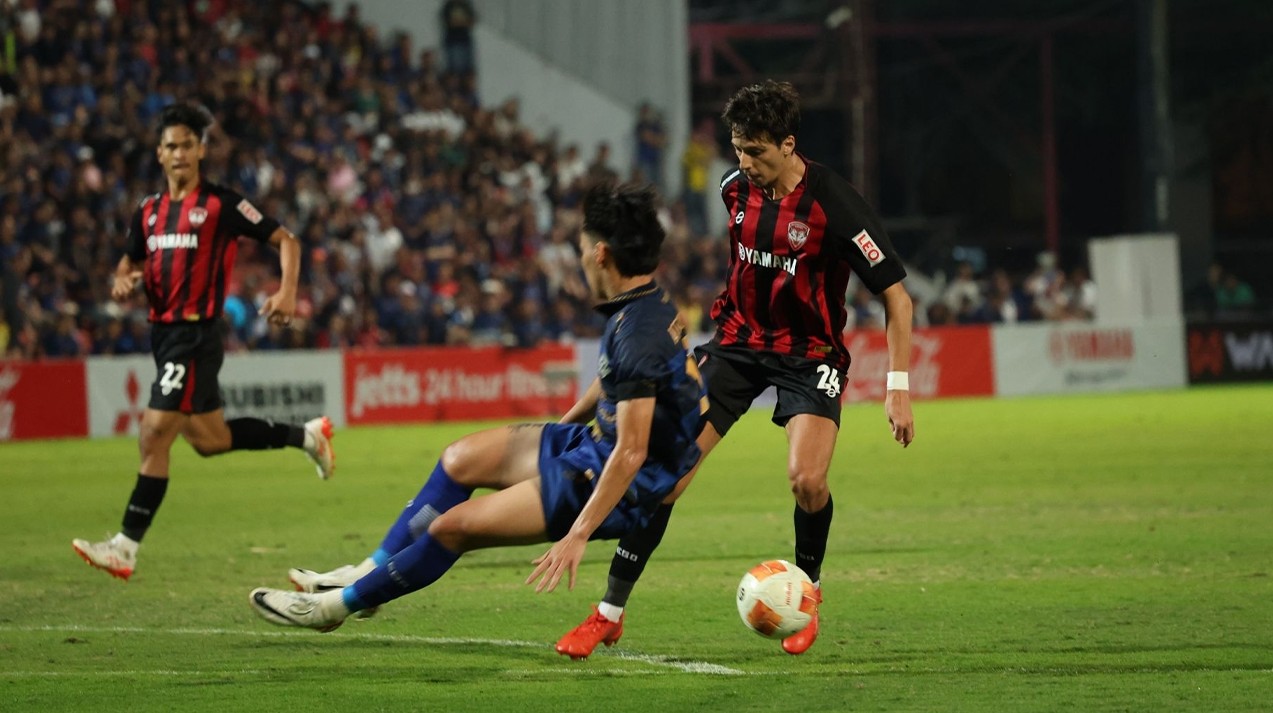
Bettors assessing domestic Southeast Asian football frequently encounter asymmetric pricing when lower-tier clubs produce sustained runs of positive form. The 2019 and disrupted 2020–2021 Thai League seasons offered a unique baseline for studying this dynamic, as regional heavyweights consistently yielded market value to mid-table outfits operating on peak tactical organization. Understanding why these surges yielded betting value—and identifying the operational thresholds where that advantage collapsed—requires deconstructing squad rotations, managerial setups, and the pricing inertia inherent to emerging football markets.
Market Misconceptions Surrounding Name Recognition in Thai Football
Domestic odds compilation often relies heavily on historical reputation and player wage bills rather than granular form cycles. Traditional powerhouses such as Buriram United and Muangthong United carried heavy liability in pre-match markets during the 2019 season, creating inflated lines against provincial opponents. Bookmakers frequently priced established sides on prestige, underestimating how tactical convergence closed the athletic gap between established giants and energetic, well-drilled regional competitors.
This gap emerged primarily because recreational volume predictably concentrates on known clubs, driving Asian handicap lines beyond realistic margins of victory. When smaller sides entered matchweeks with clean injury sheets and three or four consecutive unbeaten fixtures, oddsmakers adjusted cautiously rather than aggressively. The resulting pricing lag offered persistent value on the underdog spread, allowing disciplined bettors to capitalize on defensive cohesion before oddsmakers corrected their baseline ratings.
Tactical Mechanics Behind Small Club Win Streaks
Sustained form for lower-budget Thai sides in this era relied on compact low blocks paired with rapid direct transitions. Clubs operating on limited operational payrolls abandoned prolonged positional possession, deliberately conceding territory to elite teams burdened by creative pressure. By defending within thirty meters of their own goal, these sides neutralized the technical skill gap and forced opponents into low-percentage crosses.
Foreign recruitment further amplified this systemic resilience. Mid-table outfits invested disproportionately in single, physically dominant foreign target men supported by pace on the flanks. In high-humidity domestic environments, heavy possession play drains energy faster than reactive defensive positioning. Surging underdogs conserved stamina, absorbed thirty minutes of sterile pressure, and exploited disjointed defensive transitions late in both halves to secure results against superior individual talent.
Structural Comparison: Transition Dynamics vs. Possession Grinds
Analyzing how these systems clashed reveals clear mechanical differences in how offensive value was generated across the two profiles of clubs.
Underdogs engineered momentum by simplifying decision-making, minimizing defensive risk, and exploiting structural overcommitments from favored opponents. Conversely, traditional powerhouses had to orchestrate high-risk passing networks through dense central channels, leaving vulnerable space behind advancing wing-backs.
| Metric / Operational Factor | In-Form Underdog System | Established Frontrunner System |
| Primary Shot Location | Counter-attacks and direct set pieces | Elaborate box entries against set defenses |
| Defensive Line Depth | Low block inside defensive third | High defensive line past midfield |
| Possession Distribution | Typically 32% to 42% per match | Typically 58% to 68% per match |
| Tactical Vulnerability | Direct counter-pressing after turnovers | Turnovers in transition while overcommitted |
This comparative balance illustrates that lower possession figures did not correlate with inferior expected chance quality. When underdogs broke out, they met fragmented defensive lines with clear territorial lanes, generating high-probability chances despite taking fewer total shots. Assessing match flow through raw possession statistics inevitably distorted pre-match projections, rewarding those who weighted transitional efficiency over raw territory.
The Disruption of the 2020 Calendar and Momentum Decay
The calendar alterations introduced throughout 2020 severed the organic momentum that underdogs rely on to sustain overperformance. When the Football Association of Thailand suspended competitive matches early in the year due to global health protocols, the hiatus disrupted team chemistry and conditioning baselines. Momentum in smaller squads is fragile, built on week-to-week rhythm and psychological confidence rather than deep tactical depth.
When play resumed months later under revised registration windows, several mid-table rosters experienced substantial foreign personnel turnover. The absence of match continuity stripped surging underdogs of their primary weapon: instinctual defensive timing. Bettors who attempted to back prior form lines into the reorganized autumn schedule found themselves holding positions on sides whose underlying physical edge had evaporated over months of structural inactivity.
Line Movement and Pricing Adjustments on Regional Exchanges
Tracking the trajectory of handicap movements reveals how liquidity pools absorb underdog streaks over three-to-five-week cycles. Initial value is captured before the broader public detects a structural change in performance. Once an underdog covers three consecutive spreads, odds adjustments accelerate rapidly, eliminating the safety cushion that made the position viable in the first place.
Sharp syndicates monitor performance metrics such as defensive box entries conceded rather than final match scores. If an underdog relies on unsustainable goalkeeping heroics to scrape low-scoring draws, the market eventually prices their luck as genuine competence. The margin of error tightens dramatically as bookmakers contract Asian handicap spreads from +1.5 down to +0.5, effectively forcing the bettor to back an inferior squad to win outright.
Analyzing these fluid fluctuations requires observing how various books handle late liquidity surges across major fixtures. Under specific conditions where market sentiment heavily overcompensates for a minor club’s recent hot streak, accessing deep regional liquidity via a dedicated web-based service such as ufabet168 highlights how professional handicappers push back against excessive public enthusiasm to secure closing-line value on the opposing side.
The Role of Foreign Player Reliance and Suspension Exposure
A primary ceiling on lower-tier win streaks is the acute dependency on individual foreign attackers and central anchors. Mid-table Thai League sides rarely possessed domestic replacements capable of mirroring the physical hold-up play or finishing efficiency of their prime imports. Consequently, yellow card accumulation and soft-tissue fatigue exerted an outsized influence on team output during congested domestic schedules.
Whenever a key foreign forward collected a third yellow card or suffered a hamstring strain, the team’s tactical equilibrium vanished immediately. The underlying low-block structure could remain intact, but the absence of a viable transitional release valve led to sustained pressure on the defensive line. Bettors who evaluated streaks purely through aggregate team performance metrics overlooked the single-point failures that doomed subsequent outings.
Warning Signals Preceding an Inevitable Performance Regression
Recognizing when an underdog’s favorable run has peaked is critical for managing downside risk. Multiple observable indicators consistently signal that a side is outperforming its baseline capabilities to an unsustainable degree.
Prior to betting an in-form team entering an extended schedule, several diagnostic checkpoints determine whether the current streak reflects systemic tactical improvement or temporary statistical noise:
- Sustained Shot Concession Deficits: The team consistently concedes double the box entries it generates, surviving purely through opposing finishing errors.
- Goalkeeper Save Percentage Spikes: Clean sheets are driven by isolated reflex saves from high-probability scoring zones rather than defensive structure.
- Disproportionate Set-Piece Output: A majority of recent goals originate from defensive errors or penalties rather than created open-play chances.
- Accumulated Sprint Fatigue: Noticeable drop-offs in defensive recovery runs during the final twenty minutes of back-to-back fixtures.
Evaluating these four markers isolates the structural integrity of a streak from positive variance. If an underdog checks several of these risk criteria, positive regression will generally occur against the very next organized opponent.
Liquidity Differences Between Domestic Leagues and Broader Wagering Ecosystems
Bettors assessing domestic competition often move between local sporting markets and alternative high-speed digital wagering environments depending on seasonal scheduling. In niche football environments, market liquidity constraints often cap maximum bet limits, which causes rapid price depreciation when notable capital enters the market. This structural sensitivity requires players to manage timing and capital exposure far more rigorously than in major European competitions.
Observing capital flows reveals clear contrasts in user behavior; while domestic sports markets require exhaustive research into player fitness and weather patterns, engagement with a fast-paced casino online relies on mathematically fixed house parameters where results resolve instantaneously without external dependencies on human fatigue, local environmental factors, or sudden refereeing interpretations.
Strategic Framework for Timing Market Entries
Capturing positive expected value when backing smaller sides requires strict adherence to early-cycle entry. Bettors must identify favorable match-ups before the broader market factors the underdog’s tactical momentum into the line. The objective is to secure the widest spread possible while the public retains an anchor bias toward the historical standing of the traditional favorite.
Once the Asian handicap shifts across key numbers—such as dropping from a full +1.0 goal spread to a flat +0.5—the mathematical rationale for backing the underdog diminishes sharply. Long-term profitability in secondary football markets hinges on entering positions precisely when market inertia offers extra half-goal margins, and subsequently passing on the fixture once oddsmakers correctly align their projections with real-time performance.
Summary
Backing surging underdogs in the 2019 and 2020 Thai League seasons demonstrated that tactical specialization and physical organization can temporarily bridge the resource gap against elite clubs. Bookmakers consistently lagged in pricing defensive cohesion and direct counter-attacking efficiency, creating profitable opportunities on positive Asian handicaps. However, these runs remained structurally fragile, bounded by thin squad depth, critical foreign player dependencies, and inevitable schedule disruptions. Long-term execution required identifying these form cycles early, quantifying the sustainability of underlying chance creation, and abandoning positions the moment public sentiment pushed the spread beyond realistic bounds.